Poker Stars: Improving user perception of rewards
TL;DR
I led the redesign of PokerStars' legacy rewards system, restructuring its information architecture to reduce confusion in a fragmented, promotion-heavy ecosystem. Through research-driven decisions and iterative simplification, I established a clearer mental model for players while navigating significant technical and organisational constraints. Although the full vision was partially de-scoped, core improvements shipped and reset how the tribe approaches rewards design.
The Problem: High Value, Low Perceived Worth
PokerStars issued more rewards than competitors, yet:
- 84.7% of rewards went unused
- Net satisfaction sat at 36.4%
- Casual players felt confused, mistrustful, and disengaged
The issue wasn't reward value - it was complexity, discoverability, and mental overhead.
My Role & Leadership
As Senior Product Designer (Lead), I:
- Defined the research strategy and mentored junior designers
- Led cross-tribe alignment across Marketing, Poker, Casino, and Architecture
- Owned IA, core flows, and UX direction across multiple phases
- Balanced user needs against severe tech debt and resourcing constraints
Research as a Strategic Lever
This research wasn't used to validate UI, but to challenge who we were designing for.
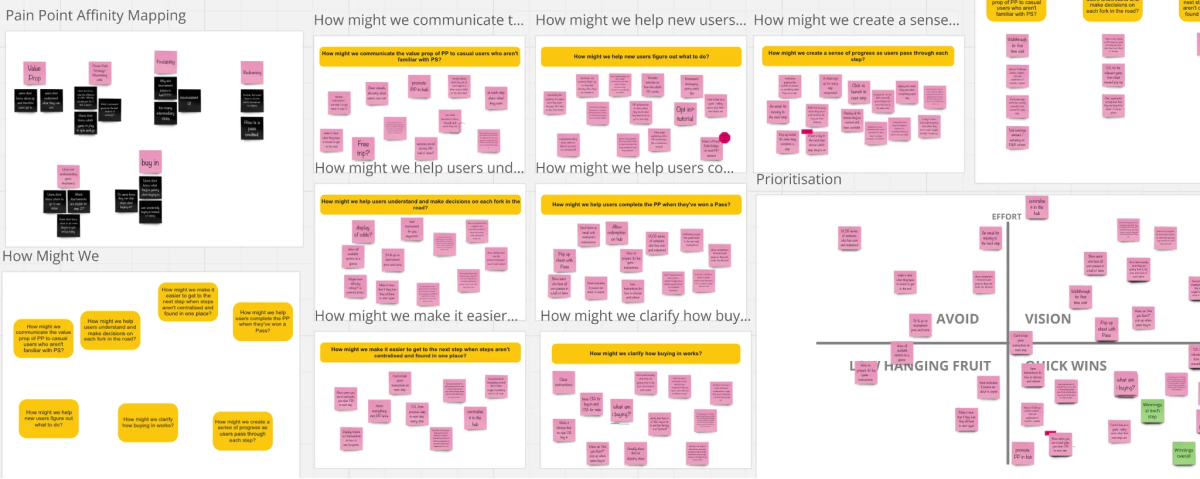
I made a deliberate, controversial call to recruit casual players instead of power users.
Why?
Solving for experts would reinforce existing complexity. Designing for casual users would improve clarity for everyone. This decision required:
- Justifying increased cost and time
- Reframing success away from revenue-heavy edge cases
- Educating stakeholders on long-term UX impact
Key Insight
- Five core insights emerged:
- Players don't want to learn reward systems
- Tangibility > volume
- Relevance beats cross-selling
- Rewards delivered outside the moment of need are ignored
- Perceived “strings attached” erode brand trust
- This reframed the problem from “How do we promote rewards?” to “How do we reduce cognitive effort?”
Design Strategy: Centralise, Clarify, Reduce
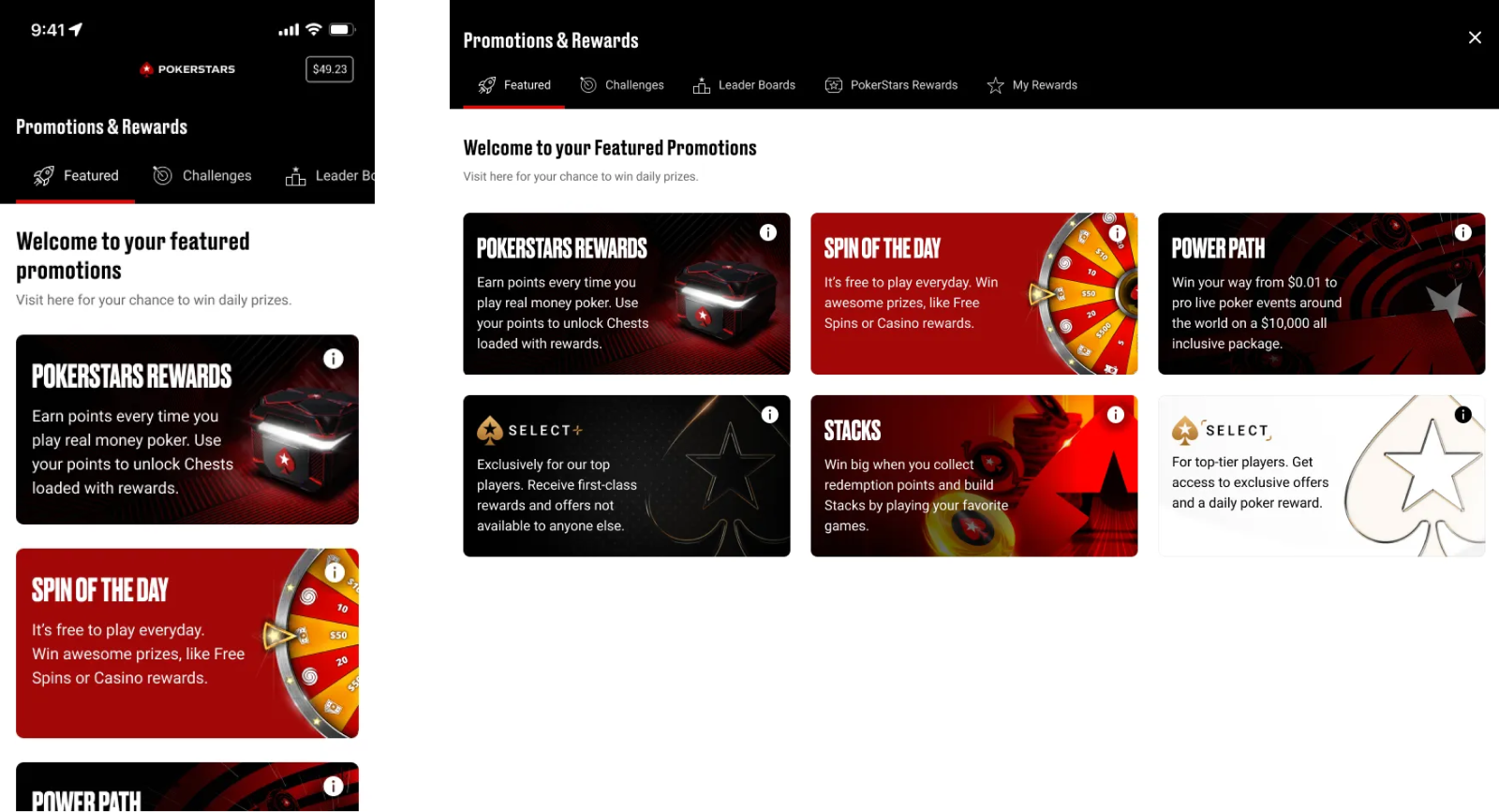
Given time, budget, and tech constraints, I prioritised structural clarity over surface polish.
Phase 1 - IA Foundation
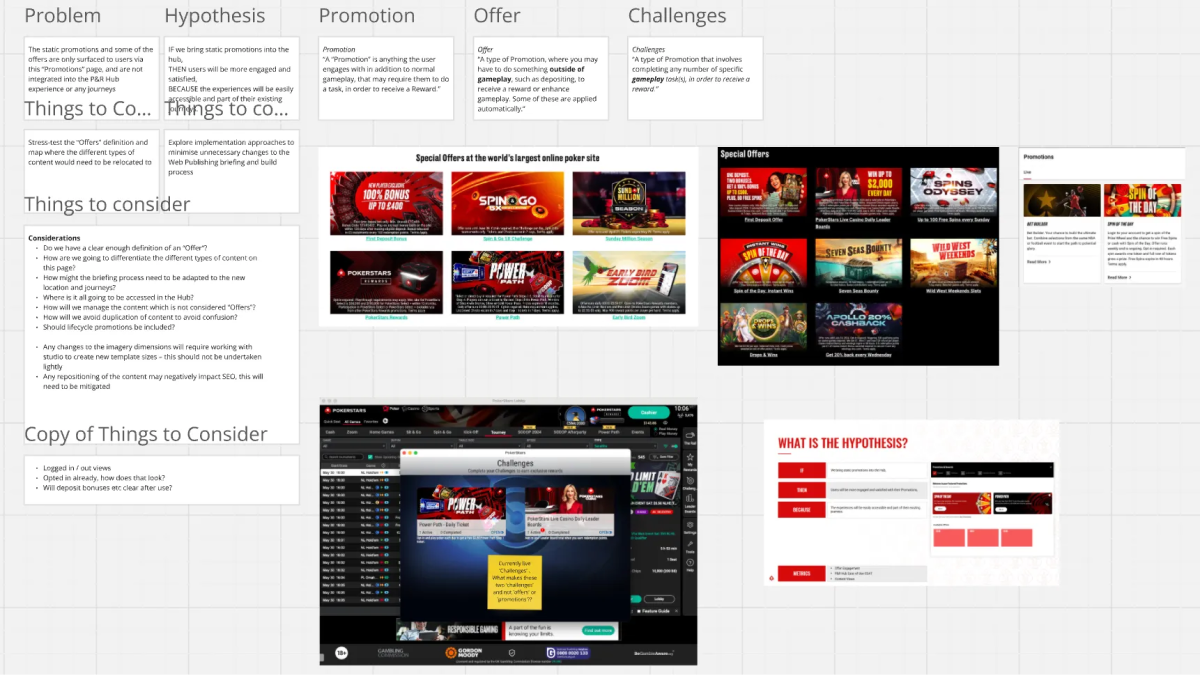
- Merged fragmented Rewards & Promotions into a single hub
- Avoided premature sub-grouping due to immutable legacy pages
- Focused on reducing wayfinding friction
Phase 2 - Flow Simplification
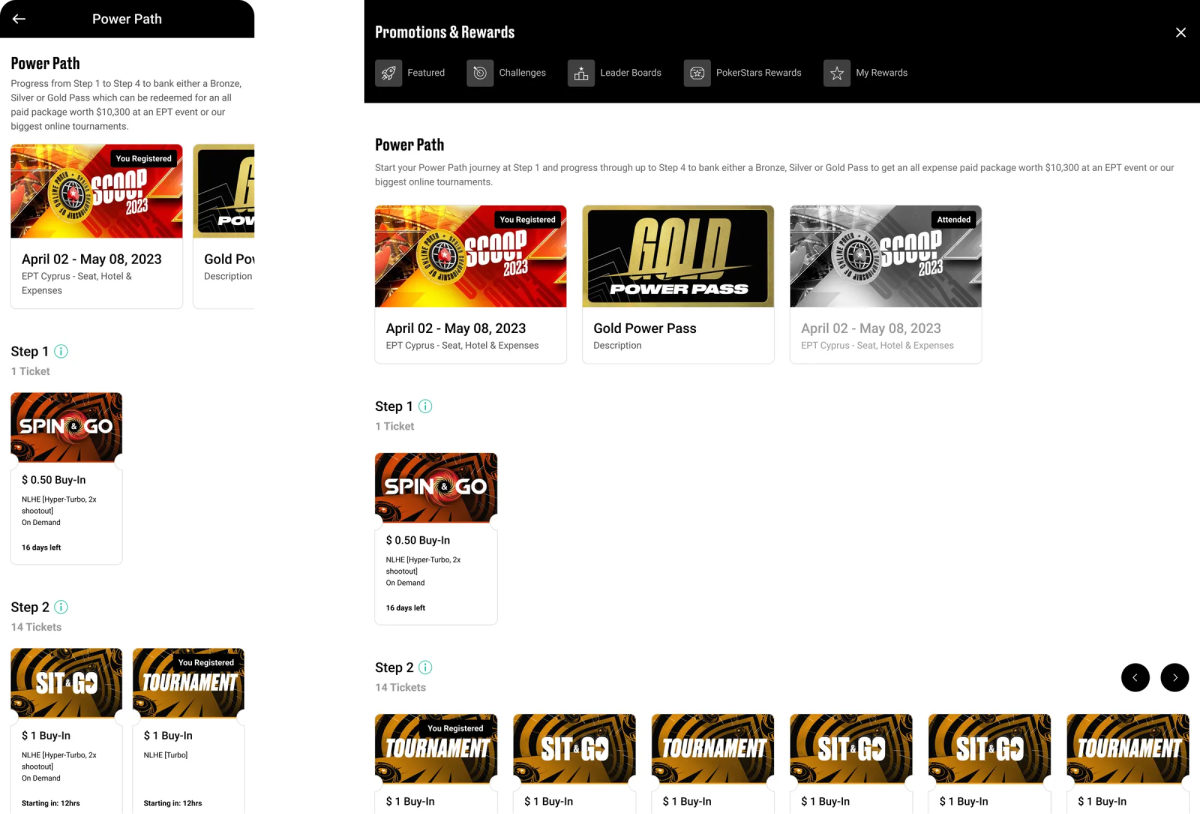
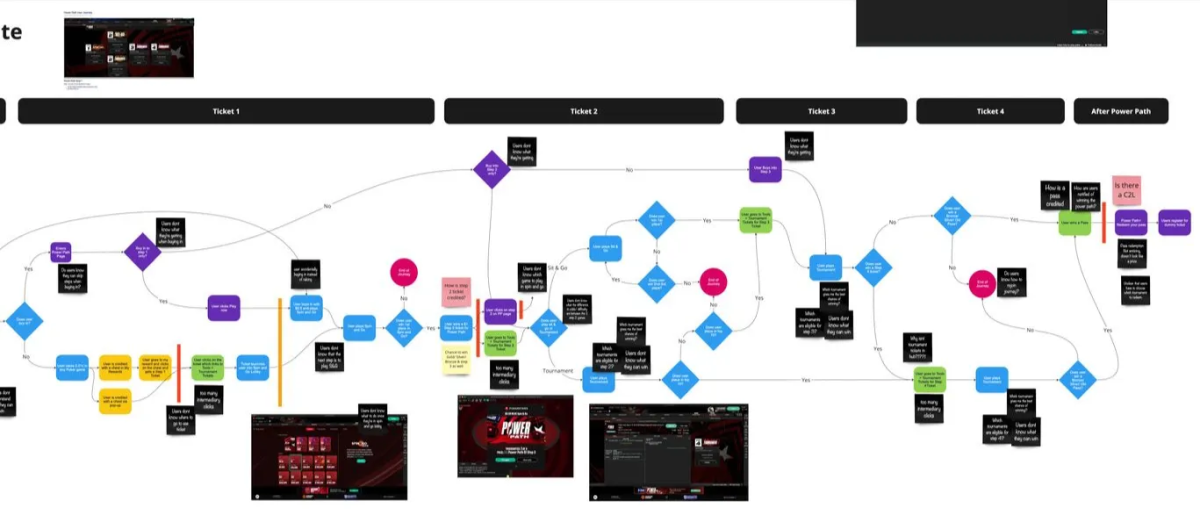
- Audited and mapped highly complex hero promotion journeys
- Facilitated a cross-functional workshop to avoid duplication
- Designed and tested a Ticket Wallet to explain multi-step journeys
When the project was deprioritised mid-build, I:
- Led a controlled de-scope to reduce our dependencies on other teams
- Preserved conceptual clarity
- Refocused effort on consistent entry points and UI coherence
Phase 3 - Usability at Scale
- Simplified filtering and opt-in states
- Tested with low-familiarity users
- Validated clarity without relying on prior product knowledge
Impact & Reflection
- Established a single source of truth for promotions
- Reduced cognitive load across high-friction journeys
- Shifted the org toward designing for understanding, not just output.
The hub became a big bet for the Promotions and Rewards team in the long term. This work reset how the vertical approaches rewards design, shifting the focus from promotion volume to clarity, trust, and long-term engagement.